OpenCorp’s guide to adoption and change management
In this guide, we’ll walk you through practical tips and best practices to help you manage change successfully across your organization. Whether you’re rolling out a new tool or shifting the way teams work together, this guide is here to help you make it stick. We’ll cover everything from setting your vision and building your core team to defining what success looks like, getting executive buy-in, creating a community of power users, planning your communications, and setting up training and support that really works.

Table of Contents
Table of Contents
Introduction - Why Change Management Matters
In today’s fast-paced environment, organizations face constant change—be it adopting new technologies, embracing digital transformation, or shifting to more agile ways of working. Even positive changes, like moving to the cloud to save costs or improve security, can cause uncertainty among employees.
When change occurs, employees often have questions:
- What does this mean for my job?
- Will my role change?
- How will my team be affected?
- Do I have the right skills?
- Is this going to add more work?
- What support will I get?
These are valid concerns. Whether you’re introducing new tools, restructuring teams, rolling out new processes, or migrating to new platforms, people want to understand what’s happening—and how it impacts them.
This is where change management comes in. It’s not just about sending a few emails or assuming people will go along with it because “change is part of business.” For change to really stick, people need to feel informed, supported, and empowered to do their work in new ways.
A thoughtful change management plan helps make that happen. It gives you the tools to get leadership on board, communicate clearly, train users effectively, and guide your teams through change with confidence.
Ready to set your organization up for success? Let’s dive in.
Building Blocks for Effective Change Implementation
Successfully implementing change requires a strategic approach that aligns leadership, communication, and support structures. Key considerations include identifying leaders to champion the change, engaging stakeholders early, clearly defining the future state, providing necessary training and resources, and establishing transparent communication channels, and setting measurable success criteria.
By thoughtfully addressing these components, organizations can facilitate smoother transitions and increase the likelihood of sustainable change.
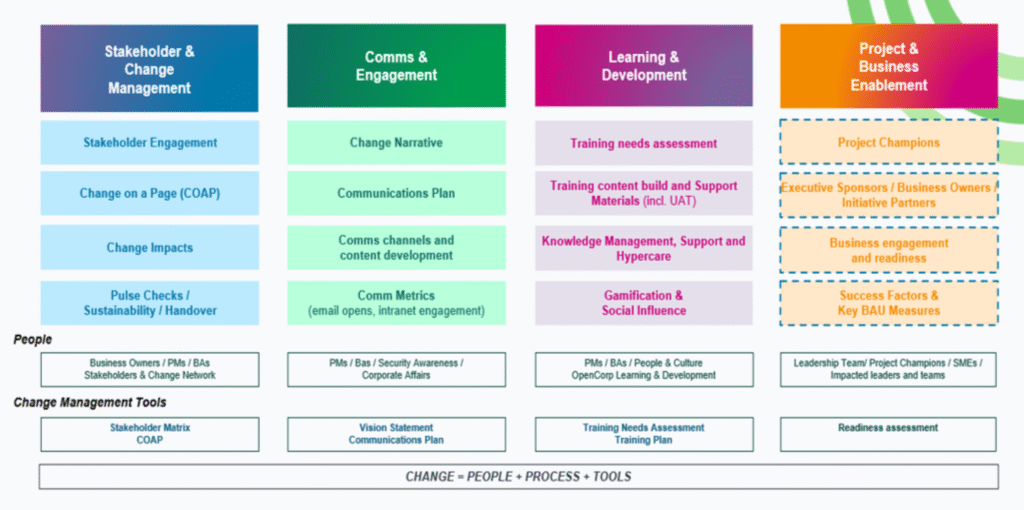
Stakeholder & Change Management
What is it?
- Assess how the change will be received by various groups and involve them early to foster buy-in and address concerns.
- Defining project scope, stakeholder roles, and change effects
Effective stakeholder engagement is crucial for successful change initiatives. By
understanding and addressing the needs and concerns of stakeholders, organizations can reduce resistance, foster collaboration, and enhance the overall effectiveness of the change process.
Tip: Use the Change on a Page (COAP) template—to kick-start your change initiative. It’s a simple, effective way to map out your high-level plan, identify key impacted groups and dates, and communicate clearly. With COAP, you’ll keep everyone aligned and set the stage for a smoother, more successful transition.
How to build a rollout plan
Step 1: Set your vision
A clear vision is the starting point for successful change. Whether it’s new software, a restructure, or launching a new division, you need to clearly define what’s changing and why.
As you shape your vision, focus on the key messages and themes that will resonate with your teams. Highlight the benefits at the organizational, team, and individual level, and include clear calls to action to guide people through the transition.
Ask Yourself:
- What are we trying to achieve?
- Why are we doing it?
- What are the key benefits?
- Who will be impacted, and in what way?
Answering these helps create a strong foundation for clear communication and alignment across the business.
TIP: To help craft a clear and compelling vision statement, we recommend using our Change Management Vision Template. It’s designed to guide you step by step through the process, making it easier to define what’s changing, why it matters, and what success looks like
Step 2: Define success
Before launching any change, it’s important to align on what success looks like and how you’ll measure it. A clear measurement approach helps track progress, demonstrate value, and support ongoing improvement.
Start by asking:
- What does success look like for this change?
- What specific, measurable goals can we commit to?
- How will we gather feedback and support users?
- What metrics will show ongoing value?
- How will we share wins and address challenges?
Common metrics include:
- Customer Satisfaction (CSAT): How satisfied are users with the change?
- Active Usage: Who’s using it, how often, and where?
- Return on Investment (ROI): Are we seeing time or cost savings?
Taking time to define success upfront helps ensure your change doesn’t just go live—but delivers lasting impact.
Step 3: Assemble your adoption team
Successful change doesn’t happen in isolation—it takes a team. Putting the right people in place early on helps ensure you’re ready to plan, communicate, and manage all the moving parts of your rollout. A few key roles to consider for your adoption team:
Project Sponsor(s)
An engaged and visible sponsor gives your initiative credibility, helps overcome resistance, and keeps it top of mind across the business. You may need more than one sponsor to ensure alignment across different areas.
Key responsibilities include:
- Coalition building: Model desired behaviors, set expectations, and help address resistance.
- Communication: Champion the change, deliver key messages, and stay visibly involved.
- Decision-making: Approve scope, align teams, and secure resources.
Project Lead(s)
Your go-to person for keeping the rollout on track. They manage timelines, coordinate efforts, and ensure alignment with overall goals.
Change Advocates / Business SMEs
These are the people who know the business inside and out—often long-time team members or subject matter experts. They understand how things really work day-to-day and can offer great insights into how the change will affect people on the ground. They’re key to making sure communication and training actually make sense and feel relevant to the teams using them.
Technical SMEs
Often from IT or experienced business users, they understand the tools inside and out. They handle setup, troubleshoot issues, and support training.
Step 4: Scope the rollout
How you introduce change matters just as much as what you’re changing. Choosing the right rollout approach—whether gradual or all at once—will shape how your teams experience and adopt the change.
Big Bang Rollout
This approach rolls out the change across the entire organization at once. It’s often tied to large-scale transformations or company-wide mandates. While it can create strong momentum, it also requires significant upfront planning and leaves less room to adjust along the way.
Phased Rollout
The most common approach we see—this means rolling out team by team or department by department. Many organizations start with a pilot group, learn from that experience, then scale to other areas using those insights to improve adoption.
Prioritizing Departments
If you’re rolling out gradually, think about where to start. Prioritize departments that collaborate closely to ensure a consistent experience. You might also begin with teams that are more open to change—this can build early wins and reduce resistance.
Choosing the right strategy ensures a smoother transition and better engagement across the organization.
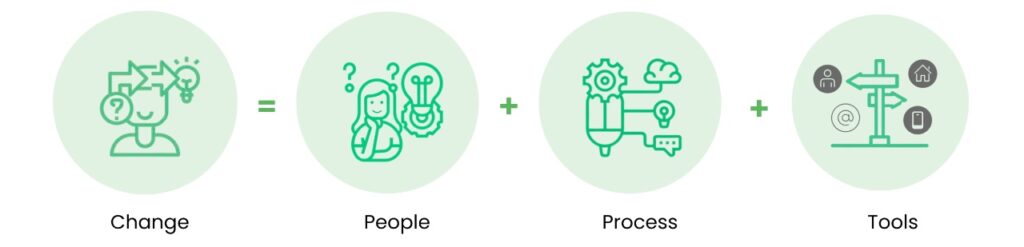
Regardless of which approach you choose, be sure to take into account the change formula:
People – Who is impacted by the change?
Process – How will they be affected, and what will change?
Tools – What tools will be introduced?
TIP: To help identify who will be impacted by the change, we recommend using our Change Management Stakeholder Matrix. This tool will guide you in categorizing and prioritizing stakeholders based on their influence and interest in the project. It helps project managers understand stakeholder needs, expectations, and potential impacts, ensuring effective communication and engagement strategies.
Once you’ve addressed these key areas, it’s time to determine the when. Timelines vary depending on the scope, available resources, and competing priorities. Consider other changes happening in your organization to assess if it's the right time or if waiting would allow for a more focused rollout.
Step 5: Identify key use cases
Successful change isn’t just about rolling out a new tool—it’s about solving real problems and making work easier. One of the most effective ways to drive adoption is by showing how the change addresses challenges teams are already facing. These are your “use cases” —practical, everyday ways people will apply the new tool or process.
Start by working with Business SMEs to uncover key pain points in each area and map how the change can help. They know their teams best and can highlight where the biggest impact will be.
TIP: Use the Use Case Template to capture divisional use cases and current challenges. It’s a great way to connect the change with real value for your teams.
Consider piloting selected use cases with smaller teams, gathering feedback, and tweaking them before a wider rollout. You may also want to develop internal case studies to showcase early successes in your communications.
Step 6: From Planning to Execution
Now that you’ve defined your use cases and understand the change impacts, it’s time to plan and execute the change. Focus on the following building blocks to strengthen the project and ensure alignment with key business-as-usual (BAU) functions.
Communications and Engagement
What is it?
- Communication involves delivering clear, consistent information to stakeholders,
aiming to reduce uncertainty and ensure understanding. - Engagement goes beyond information-sharing by actively involving stakeholders, seeking their input, and fostering a sense of ownership and commitment.
The communication and engagement approach will depend on the size and impact of the project or change. Different stakeholders have different needs—some will want detailed, regular updates, while others may only need the key points. It’s about using the right channels and messages to keep everyone informed in the way that works best for them.
TIP: To ensure effective communication during change, create a Communications and Engagement Plan. This document outlines how an organization will share information with its audiences and stakeholders. It’s a roadmap for how and when to communicate, ensuring consistency and effectiveness across different channels
Learning and Development:
What is it?
- Training Needs Analysis (TNA): Training Needs Analysis (TNA): A structured process to identify skill gaps and ensure training aligns with project objectives.
- Training Content Development & Support:Training Content & Support: Developing engaging, accessible materials and providing ongoing support—including post-training help and hypercare—to reinforce learning and ease the transition.
Tailoring Training to Change Impact
The level and type of training should match the impact of the change:
- For major changes (like a new system), in-depth training is key—think hands-on
sessions, demos, and a clear communication plan. - For smaller changes (like a policy update), a simple comms update or quick face-to- face chat during regular meetings might be enough.
TIP: Start with a TNA to pinpoint what’s needed—then build a tailored Training Plan to support a smooth, confident rollout.
Project & Business Engagement
For change to stick, it needs more than just project team support—it requires active
involvement from across the business. When key people understand the change and
champion it within their teams, it builds trust and drives positive momentum. Clear
messaging around why the change is happening, what to expect, and how people will be supported is essential.
Key roles include:
- Business SMEs or Change Champions – respected team members who guide and support others
- Executive Sponsors / Business Owners / Initiative Partners – leaders who provide
direction and visible endorsement
TIP: Use the Change Advocates Register Template to identify key people across different levels of the business who can support the change while managing their BAU responsibilities. Make sure to get manager approval for their involvement.
We’re here to help
We are committed to your success with your change project and want to help you
unleash the potential of every team across your organization. Now that you’ve built your change management plan, you may find you need additional assistance or want to consult a Change expert. Check out some of our additional resources to help you during the rollout process under Additional Support